
Carrots and potatoes
On learning to live with what you have now

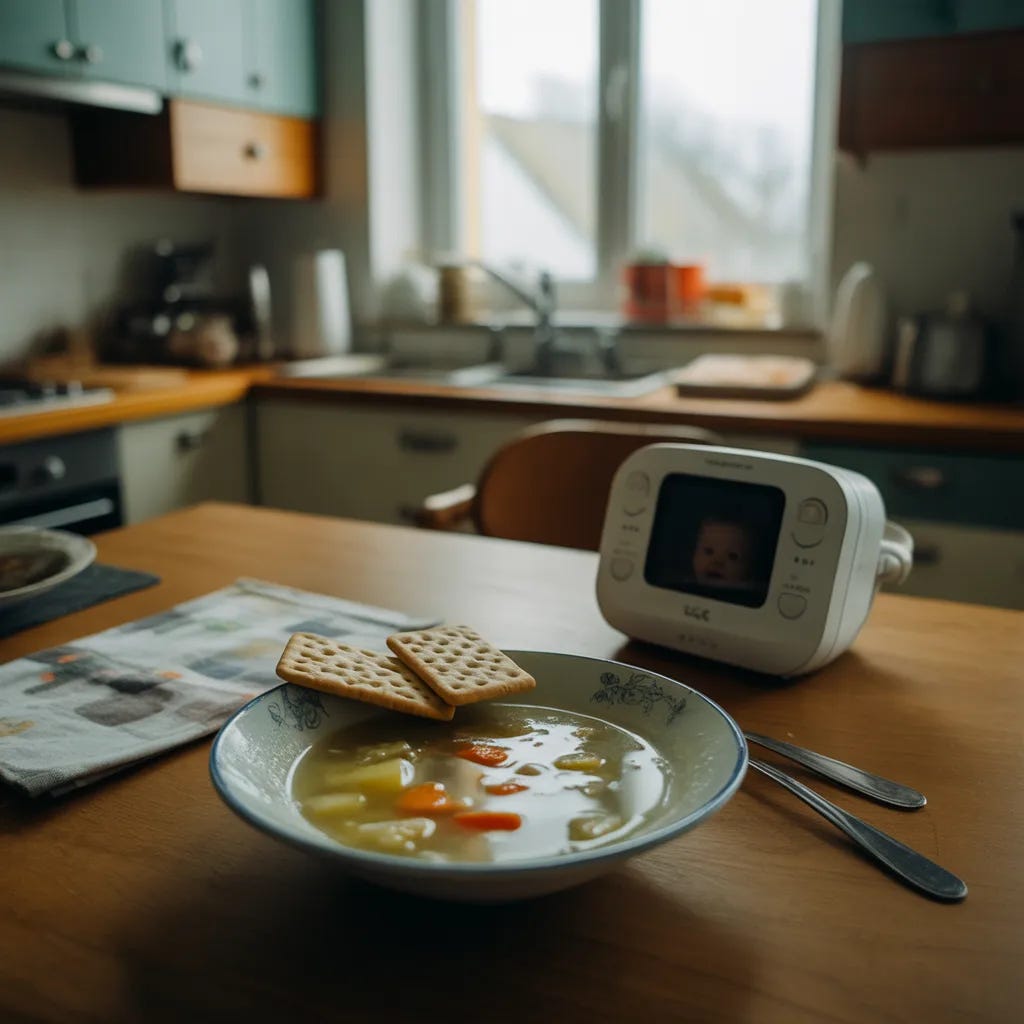
It’s 4:45 p.m. and the baby is finally down for a nap. Xanna, our new nanny from Kazakhstan, and I are both in the kitchen. I set the baby monitor on the table and rummage through the snack drawer for nuts, crackers, and dried fruit to set out.
Xanna offers me some soup she cooked earlier in the day. We have not yet sorted out the nuances of sharing the kitchen. We are only on the second day of living together, and we still move carefully around one another, feeling out what is allowed and what isn’t. I’ve told her there is no expectation for her to cook for us, but when she offers, I accept a spoonful so we can sit together and share something.
She takes the artisan crackers I have placed on the table and drops a handful into her bowl of soup. “There’s a lot to get used to,” she says, in Russian, with an accent I’m still learning. I don’t know if she means the crackers now floating on top of her soup, or something much bigger, but she has to push them aside to find the vegetables underneath.
“Like what?” I ask, taking a sip. It is a clear broth with carrots, potatoes, and tomatoes. Bland, but warm. I already know that “a lot” is an understatement. This is her first time in America. She has left her entire family behind and has no idea what the future holds.
“The carrots.”
“What’s different about our carrots?”
“They’re harder where I come from. Here, when I cook them, they fall apart so fast.”
“Oh.”
“The potatoes too. I’ll have to learn how to cook with them.”
Her observations surprise me, and they humble me. In a world where she has traveled 6,000+ miles away from everything familiar, she is focused on what should be the same. She was trying to make herself something comforting, something known, and instead ended up with vegetables that look the same, smell the same, but behave differently.
There’s something about that disappointment I recognize, the moment you understand that you can’t go back to the way things used to be, only learn how to work with what you have now.
“What else?” I ask.
“What’s the same?” she laughs, tossing her head back, as if the comparison is too big to explain.
She comes from a poor country, but she doesn’t dwell on luxury or lack. Instead, she talks about family and the weather here. I understand. Someone must have promised her sunny California, and instead she has been met with San Francisco’s rain and fog.
“I’m never going back,” she tells me, scooping the last carrots from her bowl. “My family would never accept me back because I left.”
And I realize she has no choice but to make do with the carrots and potatoes we have here. She made her decision, as hard as it was, and now she has to live inside it, adjusting to small differences that add up to something much larger.
“We have different kinds of potatoes here,” I say. “I can buy a few, and we can see if one feels closer to home.”
It’s the most I can offer. She nods, maybe satisfied, maybe just grateful to be heard.